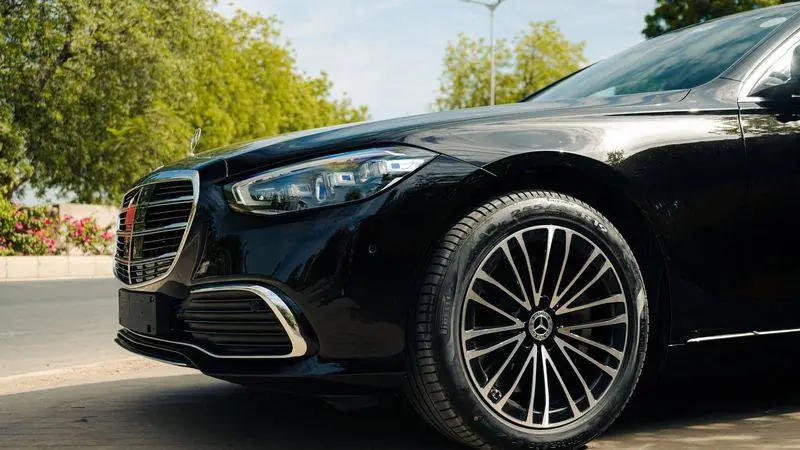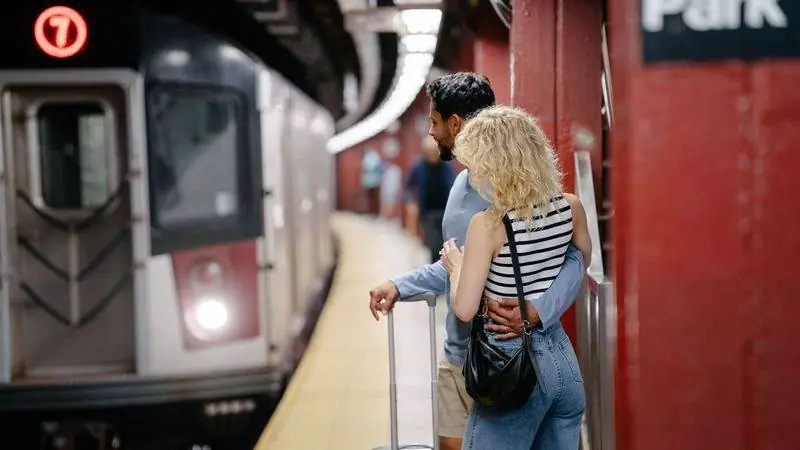


A flat rate car from Pearson to downtown Toronto is a pre-booked black car whose fixed, all-in fare is shown before you confirm. The trip is about 27 km and 25 to 45 minutes. Traffic, delays and the route do not change it; the vehicle class, your exact address, the date and time, extra stops, waiting past the included time and add-ons do.
What does a flat rate car from Pearson to downtown Toronto actually mean?
It means the number you agree to before the trip is the number you pay. You enter Pearson, your terminal or flight number and the downtown address in our reservation engine, choose a vehicle, and the engine shows one fixed, all-in fare with HST listed separately. No meter, no surge, no surprise at the hotel door. The road itself is covered on our Pearson to downtown Toronto black car route; this post explains the money logic behind a flat rate so you can compare it fairly with the other ways into the core. We do not print prices on this site, by owner rule. Instead, we show you exactly which levers move a fixed fare, so the figure you see at /book/ makes sense.
Which things set the fixed fare before you book?
Six inputs decide the figure the reservation engine shows. Each is something you choose or can see in advance:
- The vehicle class. A business sedan carrying two people and two bags is the base. A first-class sedan, an SUV for six or a Sprinter for a team each sit higher because the vehicle and its running cost differ.
- The exact addresses. Union Station and a Leslieville semi are both "downtown" in conversation, but they are different distances from Terminal 1.
- The date and time. Season and pickup time can matter; the engine already knows and prices it.
- Planned stops. A stop at an office on Bay Street before the hotel is added at booking and folded into the one number.
- Add-ons. Meet & greet inside arrivals and child seats are available at booking and appear as lines you can see.
- The direction and type of trip. An arrival with flight tracking and an outbound departure are booked as separate legs.
What never changes a flat-rate fare?
Traffic. A collision at the 427 and Gardiner interchange might turn a 30-minute ride into a 55-minute one, and the fare stays exactly where it was. The same goes for the chauffeur's choice of route: if the Gardiner is closed for weekend works and the car uses the 401 express lanes and Avenue Road instead, that is our problem, not yours. A flight that lands two hours late does not change the fare either, because the chauffeur tracks the real landing time and the included waiting only starts once the aircraft is on the ground. Demand does not change it either: a Friday evening with long lines at every curb costs the same as a quiet Tuesday.
What can add to the fare after you have booked?
Only things you change or extend on the day, and the chauffeur tells you before any of them start. These are the honest exceptions:
- Waiting beyond the included allowance. From actual landing you get 30 minutes on Canadian domestic and US flights and 60 minutes on other international arrivals. After that, time is added in 15-minute blocks, and you get a message first.
- An unplanned stop. Asking to swing by a pharmacy in Etobicoke on the way in is fine; it is simply added as extra time.
- A new destination. Deciding at the curb to go to Yorkville instead of the Financial District is a different trip, so the fare is adjusted to match.
If you know about any of these when you book, add them in the engine and they become part of the fixed number instead.

How far is each downtown neighbourhood from Pearson?
"Downtown" covers a lot of ground. These are typical planning figures from either terminal, and the right-hand column shows what usually decides the drive time on that run.
| From Pearson (YYZ) to | Distance | Typical drive time | What usually decides the time |
|---|---|---|---|
| Union Station / Financial District | about 27 km | 25-45 min | Gardiner and 427 interchange at rush hour |
| Entertainment District and King West | about 25 km | 25-40 min | Spadina and King on event nights |
| Liberty Village | about 23 km | 20-35 min | Gardiner off-ramps near Jameson |
| Harbourfront and Queens Quay | about 27 km | 25-45 min | Lake Shore and summer festival traffic |
| St. Lawrence and the Distillery District | about 30 km | 30-50 min | the east end of the Gardiner and the DVP ramps |
| Yorkville and Midtown | about 25 km | 25-40 min | the 401 express lanes and Avenue Road |
| Billy Bishop mainland pavilion | about 30 km | 30-50 min | Bathurst Street south of Front |
The trip planner gives kilometres and drive time for any other address pair, and the reservation engine turns that address into the exact fixed fare.
How does a pre-booked flat rate compare with a taxi from the rank?
Pearson has its own licensed taxis and airport limousines waiting at the ranks for walk-up passengers, and the airport sets their fares by destination zone rather than by meter; the Pearson taxis and limos page explains the system. So a cab from the rank to downtown is also a known number, and for a solo traveller who has not planned ahead it is a perfectly reasonable choice. The difference is not whether the price is fixed. It is everything around it: a rank car does not know your flight, does not wait if customs is slow, and you take the vehicle at the front of the queue, which matters when four suitcases and a stroller meet a small sedan. A pre-booked car is the size you chose, is already tracking you, and the return trip sits on the same booking.
How does it compare with rideshare and the UP Express?
App rideshare is priced by the platform at the moment you request it, and that price moves with demand; on a stormy evening with delayed flights it can climb while you stand on the curb. Rideshare pickups at Pearson also use their own zone, separate from pre-arranged cars. The UP Express has a published fare and runs from Terminal 1 to Union Station in about 28 minutes, stopping at Weston, Mount Dennis and Bloor. For one person with a carry-on staying near Union, it is honestly the simplest answer, and we say so. Its limits are the walk at both ends, Terminal 3 passengers needing the Terminal Link train first, and the fact that it stops at Union rather than your door. Our cheapest way to Pearson comparison sets every option side by side without prices.
Who gets the most value from a flat-rate car into the core?
The fixed fare covers the whole vehicle, not each seat, so its value grows with the size of the party:
- A family of four with checked bags. One SUV, one number, everyone and everything together, child seats fitted before the car reaches the terminal.
- Two colleagues landing for meetings. Shared fare, a quiet car for calls, and the option to drop one at Bay Street and one at a hotel.
- A late international arrival. After a long-haul flight, nobody wants to compare apps at 00:40; the car is already waiting.
- Anyone landing at Terminal 3 who would otherwise need two transfers to reach the train.
Is it cheaper to book the return leg at the same time?
We do not publish prices, so we will not claim a discount that the engine may not show. What booking both legs together does is lock both fixed fares at once, keep them on one confirmation and one dispatch desk, and make sure the outbound pickup time is planned around your flight rather than squeezed in at the last minute. Our how our fares work page explains how each leg is calculated. For the departure, give the airline and terminal; the chauffeur drops at the right departures curb. If you are unsure when to leave, our post on how early to arrive at Pearson works backwards from your gate time.
What happens to the fare if your flight is cancelled or moved?
If the airline moves your flight, send us the new flight number and we move the booking; the fixed fare normally follows the new time. If the trip is cancelled altogether, the sitewide cancellation rule applies, measured from the scheduled pickup: more than 72 hours before is free; 72 hours or less is a 10 per cent charge, 48 hours or less is 50 per cent, and 24 hours or less or a no-show is 100 per cent. In a snowstorm, message us as soon as the airline rebooks you. Weather and road updates for the day are on Ontario 511, which our desk checks before early-morning runs.
When is the hourly chauffeur better value than a flat-rate transfer?
When the day does not end at the hotel. If you land at 08:30, have a 10:00 meeting on King Street, a lunch in Yorkville and a site visit in Vaughan, a one-way flat rate followed by three separate rides costs time and privacy. Our hourly chauffeur service keeps one car and one chauffeur from a three-hour minimum for sedans, SUVs, vans and Sprinters, with extra time in 30-minute blocks. The car meets you at Pearson, your luggage stays locked in the trunk all day, and the chauffeur waits outside each building. As a rule of thumb, once you have two or more stops where you will be inside for a while, price an hourly booking in the engine alongside the transfer and compare the two numbers yourself.
Which vehicle should you choose for the downtown run?
Pick by people and luggage, then by comfort:
- Business sedan: two passengers, two large cases.
- First-class sedan: the same load with more rear space for an executive.
- SUV: up to six passengers and four large bags; the default for families.
- Executive Sprinter: seven passengers with luggage, ideal for a team arriving together.
Sizing up one class is cheaper than discovering at the Terminal 3 curb that the trunk will not close. The engine only offers vehicles that fit the passengers and bags you enter.

What mistakes make a flat-rate booking go wrong?
Most problems come from booking details rather than the road:
- Entering the scheduled time instead of the flight number, so the car cannot track a delay.
- Typing a building name without the street, which is how two different "King Street" towers get confused.
- Forgetting the stroller, ski bag or hockey bag, so the vehicle offered is too small.
- Leaving phones in airplane mode after landing, which stops the chauffeur's message about the exact spot.
- Walking to the rideshare zone by habit instead of the pre-arranged pickup area described on Pearson's pre-arranged services page.
Our Pearson international arrivals pickup plan covers the walk from customs to the car step by step.
Does a flat rate work for hotels and offices, not just homes?
Yes, and that is where most downtown flat-rate trips end. The chauffeur drops at the hotel's front drive or the building's main entrance and, for arrivals in the other direction, picks up there too. On game nights near Union Station or during TIFF, a pickup may move a block to a side street; the chauffeur texts the exact spot. If you are choosing where to stay, our Financial District hotels and waterfront hotels pages describe the areas closest to the end of this route. If the flights or the hotel still need booking, our travel desk can arrange them alongside the car so the pickup time lines up with the real itinerary.
How do you book a flat-rate car from Pearson to downtown?
- Open the reservation engine on any page, use the floating Book now button, or go to /book/.
- Choose an airport transfer from Toronto Pearson and enter the flight number.
- Enter the full downtown address, passengers, bags, any stops and add-ons.
- Compare the fixed fares for each vehicle that fits, then confirm the one you want.
- You receive a confirmation, then the chauffeur's name and car details before landing.
No app, no marketplace commission, one dispatch desk from booking to drop-off. If the trip is really a day of meetings, compare the hourly option on the same screen before you confirm.