

A shuttle to Toronto Congress Centre usually means two services: a short Sprinter loop from the Dixon Road and airport-area hotels, a few kilometres away, and a timed express from downtown, about 25 km and 25 to 40 minutes. The venue is about 6 km and 10 to 15 minutes from Pearson, so many delegates can go straight from the airport to the hall.
The Toronto Congress Centre is built for cars: big surface lots, highway access and hotels on the doorstep. That makes it easy for a local attendee who drives and hard for a delegation staying downtown or arriving by air. This post covers the shuttle side for organisers and delegate managers. For drop-off notes, vehicle choice and hourly service at the venue, see our Toronto Congress Centre car service page.
Shuttle to Toronto Congress Centre: which service does your event need?
Start with where delegates sleep.
- Airport-area hotels only. One short loop with Sprinters, frequent departures, very little risk.
- Downtown hotels only. A timed express with fixed departures, not a loop, because a 25 km run each way cannot hold a tight headway.
- Both. Two separate services, so downtown delegates never wait while a vehicle visits airport hotels, and the reverse.
- Pearson arrivals. Transfers timed to flights, often straight to the hall with luggage.
Most international conferences at the venue need all four on the first day and two on the others.
Where exactly is the venue, and which building is which?
The Toronto Congress Centre gives its address as 650 Dixon Road, just south-east of Pearson in the former City of Etobicoke. The complex has more than one building; event organisers' directions commonly list the South Building on Dixon Road and the North Building with its entrance on Martin Grove Road. Always confirm the building and hall from your event's own instructions and put them on the delegate card.
That detail matters for a shuttle more than for a single car. A Sprinter that drops 12 delegates at the wrong building has made 12 people late.
How far is it from the hotels and downtown?
Typical planning figures; weekday peaks on the 427 and 401 add time.
| From | Distance | Typical drive time | Shuttle type |
|---|---|---|---|
| Dixon Road airport hotels | 1-3 km | 5-10 min | Loop |
| Airport Corporate Centre hotels (Mississauga) | about 8-10 km | 15-20 min | Loop or second loop |
| Toronto Pearson (YYZ), T1 or T3 | about 6 km | 10-15 min | Flight-timed transfers |
| Union Station / Financial District | about 25 km | 25-40 min | Timed express |
| Yorkville & Midtown | about 25 km | 30-45 min | Express or hourly car |
| Mississauga City Centre | about 14 km | 15-25 min | Hourly car |
| Vaughan | about 20 km | 20-35 min | Hourly car |
The reservation engine quotes the exact fixed fare for any single trip; shuttle programmes are priced in writing.
How should the Dixon Road hotel loop be sized?
Use the shuttle arithmetic: vehicles needed equals loop time divided by headway. With hotels 1 to 3 km away, a full loop through three hotels and the venue can be 20 to 25 minutes in the morning, so a 10-minute headway needs two or three 12-seat Sprinters. If one hotel holds most of the room block, add a partner coach dedicated to that hotel for the peak and keep the Sprinters on the others.
Our sibling post on event shuttle service planning walks through the full calculation, signage and staffing. The short version for Dixon Road: small vehicles, frequent departures, a shuttle captain at the busiest hotel.
Why should the downtown service be an express, not a loop?
Because one slow trip ruins a loop. A Sprinter that meets a crash on the Gardiner or the 427 on its way back downtown leaves the next stop waiting 30 minutes. An express with fixed departures, for example 7:15, 7:35 and 7:55 from one central downtown hotel, is predictable. Delegates from other downtown hotels walk to that pick-up point or take a short ride.
In the evening, reverse it: fixed departures from the venue at the close and after any reception. Print the last departure on every card.
Is driving and parking a better option for some delegates?
For locals, often yes. The venue has large surface lots with access from Dixon Road and Martin Grove Road, and some organisers advertise free parking for their event; check your own event's information rather than assuming. On busy weekends the access roads back up with cars looking for spaces, so arrive before the peak.
For out-of-town delegates, parking is irrelevant: they do not have a car. The choice is between the shuttle, a taxi or ride-hail at the close when everyone wants one at once, and a pre-booked car.

How should Pearson arrivals be handled?
As a manifest with flight numbers. Every Pearson pickup is flight-tracked, with waiting included from the actual landing: 30 minutes on Canadian domestic and US flights and 60 minutes on other international arrivals. Curbside pickup at the pre-arranged area, described on Toronto Pearson's pre-arranged services page, is included; a name-board meet inside arrivals is available at booking.
Because the hall is only 10 to 15 minutes away, many delegates go straight to registration with their luggage. Tell us, and we send a vehicle with room for bags. Teams on the same flight share an SUV or Sprinter.
Departure day works in reverse. Schedule airport runs from the hall by flight time, allowing about 15 minutes to Terminal 1 or Terminal 3 plus check-in and security time, and give every delegate a named pickup slot rather than a general "shuttles to the airport after lunch". A late session running over is then a small change to one car, not a crowd at the door.
What timing works for a 9 a.m. opening?
A worked example:
- 7:15 a.m. First downtown express leaves the central hotel.
- 7:45 First Dixon Road loop departure; then every 10 minutes.
- 8:00 Downtown express arrives, allowing for a slow 427.
- 8:15 to 8:50 Peak on the hotel loop; the shuttle captain calls for an extra run if the queue grows.
- 9:00 Opening session; the loop stretches to every 20 minutes.
- Close plus 30 minutes Last departures to both hotel clusters.
Winter changes this. Our cars run winter tires from November to April, but snow on the 427 and 401 adds time; check Ontario 511 the night before.
When should a delegate keep a car by the hour instead?
When their day is not the conference timetable. Sales teams visiting customers in Mississauga, Brampton or Vaughan between sessions, executives with a downtown meeting in the afternoon, and speakers who fly out the same evening are better served by an hourly chauffeur in Toronto, from a 3-hour minimum with extra time in 30-minute blocks. The airport district is not walkable, and taxis are scarce at the close; the car simply waits nearby.
What about galas and banquets at the Congress Centre?
The venue also hosts gala dinners, award nights and large banquets. Evening shuttles follow a different pattern from conference loops: a timed outbound wave from the hotels, then returns on demand as guests leave between 10 p.m. and midnight. VIPs ride separately in a first-class sedan or premier luxury SUV. Alcohol is not allowed in our vehicles, so the drinks stay at the dinner and nobody has to drive home. Our corporate events and galas page covers evening programmes.
How does the Congress Centre compare with the International Centre?
Both sit beside Pearson, on opposite sides. The Congress Centre is south-east of the airport on Dixon Road, closer to the 427 and a few minutes quicker from downtown. The International Centre is on Airport Road in Mississauga, east of the runways. Shuttle plans are similar; the hotel loops differ. Our sibling post on International Centre parking and shuttles covers the other venue.
Which vehicles suit the shuttle?
- 12-seat Sprinter luxury vans for hotel loops; they fit hotel front drives and turn around quickly.
- Executive Sprinter (7) for speaker and VIP runs.
- 55-seat coaches from vetted partner operators in the LimousineWorldwide.Directory network for one big hotel block or the downtown express on peak mornings.
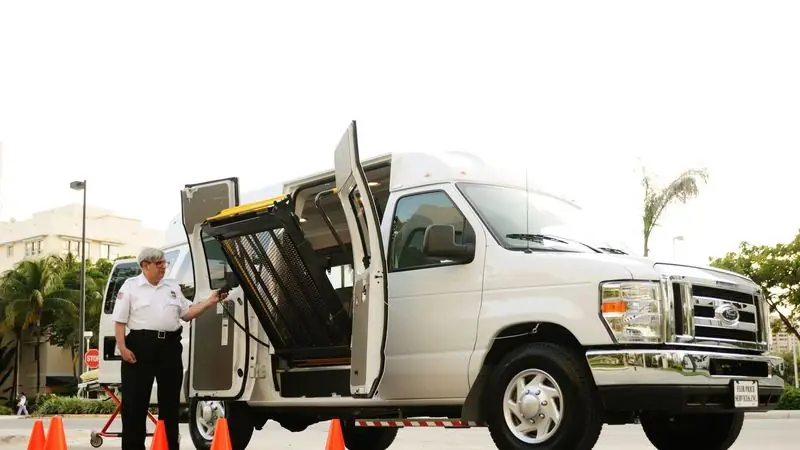
- Wheelchair-accessible vehicle, available when booked in advance; tell us about the wheelchair or scooter at booking.
Capacities are on the Sprinter luxury van and coach entries of the fleet page.
What mistakes do organisers make with airport-district shuttles?
- Running one loop for downtown and airport hotels together. Downtown delegates spend an hour on board; split the services.
- Not naming the building. Two buildings and several entrances mean a wrong drop costs ten minutes per delegate.
- Ignoring the close. Everyone leaves at once, taxis are scarce, and the last shuttle must run 30 minutes after the final session.
- No plan for Pearson departures. On the last day, delegates go straight from the hall to the airport with luggage; schedule airport runs, not just hotel returns.
- Assuming free parking for everyone. Out-of-town delegates have no car to park, and local parking terms vary by event.
What should the delegate card say about the shuttle?
Keep it to one side of a card in the registration pack. List each hotel's stop with a short description of where to wait, the first and last departures, the morning headway, the express departure times from downtown, the building and entrance at the venue where the shuttle sets down and where it collects, and a dispatch contact for missed runs. Use one colour per service, for example green for the Dixon Road loop and blue for the downtown express, and repeat those colours on the windscreen placards. Delegates read cards at breakfast; make the times easy to find.
What do organisers need to send for a written plan?
The venue building and hall, the agenda, attendance by day, the hotel list with room-block sizes, the expected arrival pattern at Pearson, and any VIP or accessibility needs. A coordinator returns loops, vehicle counts, timetables and terms in writing. Hotel blocks and flights can be arranged through the travel desk so the manifest and the rooms come from the same plan.
How do I book a shuttle or car to the Toronto Congress Centre?
Single transfers and hourly cars are booked in the reservation engine on any page or at /book/, with 650 Dixon Road and your building in the notes; the fixed fare, including tolls on the planned route and gratuity, appears before you confirm. For shuttle programmes, send the details above and a coordinator prices the plan. Individual bookings follow the cancellation rule: free more than 72 hours before pickup, 10 % at 72 hours or less, 50 % at 48 hours or less, and 100 % at 24 hours or less or for a no-show.