

An event shuttle service in Toronto is a set of vehicles running a fixed loop between hotels and a venue on a published timetable. Plan it from four numbers: peak riders in the busiest hour, loop time at that hour, seats per vehicle and the headway you promise. Then sign every stop, staff the busiest one and keep a spare vehicle for rain.
Most event shuttles fail in the same three ways: the loop takes longer than anyone measured, the vehicles are the wrong size for the hotel driveways, and delegates cannot find the stop. This post walks through the planning arithmetic and the on-the-ground details we use for conference, gala and corporate event shuttles. For the full service, including Pearson arrivals and VIP cars, see our trade show transportation in Toronto page.
Event shuttle service Toronto: what decides the plan?
Four numbers, worked out before anyone chooses a vehicle.
- Peak riders. How many people need to arrive in the busiest 60 to 90 minutes, usually before the morning keynote.
- Loop time. The full round trip from the first stop, through each hotel, to the venue and back, measured at the hour the shuttle will actually run.
- Seats per vehicle. Twelve in a Sprinter luxury van, seven in an Executive Sprinter, 55 in a partner coach.
- Headway. How often a vehicle leaves each stop: every 10, 15 or 20 minutes.
Vehicles needed equals loop time divided by headway, rounded up. Capacity per hour equals vehicles times seats times trips per hour. If capacity is below peak riders, shorten the headway or use bigger vehicles.
How does the arithmetic work for a real Toronto loop?
A worked example: 300 delegates in three downtown hotels attending a session at Exhibition Place, with about 60 % expected to ride in the 75 minutes before a 9 a.m. keynote. That is 180 riders.
- Measured loop time at 7:45 a.m.: 30 minutes, including stops and the Lake Shore lights.
- Promised headway: 10 minutes, which needs three vehicles on the loop.
- With three 12-seat Sprinters: each completes about 2.5 loops in 75 minutes, carrying roughly 90 people in total. Not enough.
- With four Sprinters plus a partner coach making two runs from the largest hotel: about 120 seats from the Sprinters and 110 from the coach, roughly 230. Enough, with a margin for rain.
Change one number and the answer changes. That is why we measure the loop at the real hour rather than using a map's estimate.
Should the shuttle use Sprinters or coaches?
Each has a job.
| Vehicle | Seats | Strengths | Weaknesses | Best use |
|---|---|---|---|---|
| Executive Sprinter | 7 | Lounge seating, quick to load | Small capacity | VIP or speaker shuttle |
| Sprinter luxury van | 12 | Fits hotel front drives, fast turnaround | Needs more vehicles for big peaks | Downtown loops, two-hotel plans |
| Coach (partner) | 55 | Moves a large block at once | Needs a bus bay, slow to fill and unload | One large hotel to one venue |
| Mixed fleet | Varies | Coach for the peak, Sprinters for the shoulders | More coordination | Most conferences over 200 riders |
Our own fleet runs the Sprinters; coaches come from vetted partner operators in the LimousineWorldwide.Directory network and are named in the written plan. The Sprinter group transportation page lists capacities and luggage space.
What headway should be promised to delegates?
Promise what you can keep in the worst traffic of the day, not the best. For a downtown loop, a 10-minute headway in the morning peak is realistic with enough vehicles; for an express between downtown hotels and a hall near Pearson, fixed departures every 20 or 30 minutes work better than a loop, because a single slow trip on the 427 would wreck a tight headway.
Outside peaks, stretch the headway. A loop running every 10 minutes at 8 a.m. can run every 20 minutes from 10 a.m. to 3 p.m., then tighten again before the close. Fewer vehicles in the middle of the day keeps the plan efficient.
Should it be a loop or a set of express runs?
A loop suits hotels close together and close to the venue: downtown hotels feeding the MTCC on a wet morning, or the Financial District feeding Exhibition Place. An express suits distance: downtown to the Toronto Congress Centre is about 25 km and 25 to 40 minutes, so a loop would leave delegates waiting at the far end.
Many programmes need both: a short loop on the venue's side of town and an express from the other hotel cluster. Our sibling post on shuttles to the Toronto Congress Centre shows the airport-side version of that plan.
Where should the shuttle stop at each hotel?
Wherever the hotel agrees in writing. Front drives in downtown Toronto are small and busy, and a hotel that hosts a wedding or a second conference the same morning may ask shuttles to use a side entrance or a lay-by. We confirm the stop with each hotel's front office before the event, and we put that exact spot on the delegate card.
At the venue, the stop is wherever the venue and its traffic staff allow. Neither the MTCC nor Exhibition Place publishes a limousine bay, so we follow the venue's event plan and the organiser's instructions rather than inventing one.

What signage does an event shuttle need?
Signs are cheaper than missed sessions. A working set:
- A stop sign at each hotel, inside the lobby and at the door, with the event name, the next departure times and the last return.
- A vehicle placard in the windscreen with the event name and the loop name, for example "Blue loop: hotels A and B".
- A venue sign at the drop-off showing where the return shuttle leaves from, which is often not the same spot.
- A one-page delegate card in the registration pack, with the stops, the timetable and a dispatch contact.
Use one colour per loop and keep the wording short. Delegates read signs at walking pace while talking.
Who should staff the busiest stop?
A shuttle captain: one person from the organiser or from us at the busiest hotel in the morning and at the venue at close. The captain counts riders, holds a vehicle for a few seconds when a group is coming, and radios or texts dispatch when a stop needs an extra run. Without a captain, the busiest stop overloads quietly while other vehicles run half empty.
On larger programmes, dispatch watches all the vehicles and moves one from a quiet loop to a busy one. That decision is easy when someone at the stop is reporting the queue.
How do you plan for rain, snow and game nights?
Plan for more riders. On a dry day many downtown delegates walk to the MTCC through the PATH or along Front Street; on a wet or snowy morning they all want the shuttle. Keep one spare vehicle on standby on the first morning and on any day with a bad forecast, and check Ontario 511 before the first departure.
Evenings bring their own traffic. A Blue Jays game at the Rogers Centre or an event at Scotiabank Arena slows Bremner Boulevard and Front Street; a BMO Field match does the same at Exhibition Place. We move the evening pickup a block away and tell delegates where to walk.
How should the first and last runs be timed?
The first run should reach the venue 15 minutes before registration opens, so early staff and volunteers are inside before delegates arrive. The last return should leave about 30 minutes after the final session or reception ends, because people linger. Print that last time on every sign and delegate card.
Add one earlier return in the afternoon for delegates who leave before the close. It costs little and stops the early leavers from hunting for a ride on the street.
Can the shuttle carry delegates with accessibility needs?
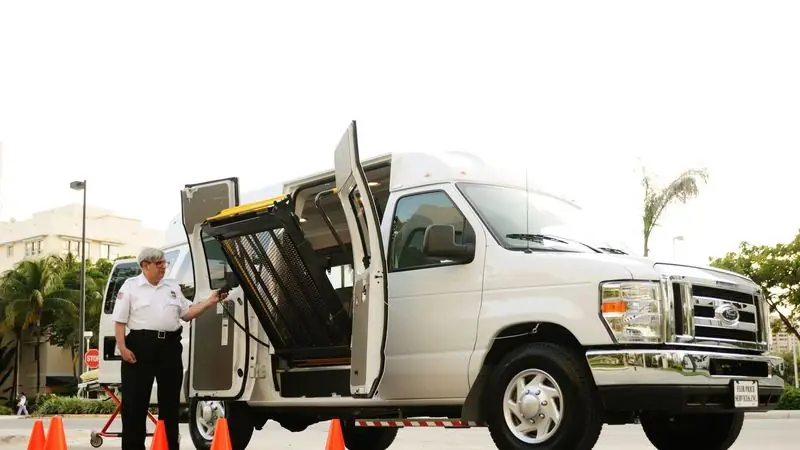
Yes, with notice. A wheelchair-accessible vehicle is available when booked in advance; tell us about the wheelchair or scooter at booking. Chauffeurs also fold and stow wheelchairs and walkers for passengers who can transfer to a seat. Build accessible runs into the timetable rather than treating them as exceptions, and put the request process on the delegate card.
For public transit alternatives, the TTC runs Wheel-Trans for eligible riders. The event shuttle is still the simplest option for most delegates with mobility needs, because it goes door to door.
Should the shuttle meet trains at Union Station too?
Sometimes. Delegates arriving on GO or VIA, or on the UP Express from Pearson, land at Union Station, which is beside the MTCC and about 4 to 5 km from Exhibition Place. For an MTCC event they simply walk. For a venue further away, a short Union Station run timed to the busiest arrivals saves them a taxi queue. Check GO Transit and UP Express timetables for the arrival day, and set the shuttle departure 10 minutes after the most popular trains rather than on the hour. Put the Union Station stop on the delegate card with a clear description of the exit to use, and ask the shuttle captain to meet the first run.
What should the timetable look like on paper?
Simple, with fixed times rather than "every 10 minutes" alone:
- Morning: departures from each hotel at 7:30, 7:40, 7:50 and so on until 9:10.
- Midday: every 20 or 30 minutes, or on request through dispatch.
- Close: departures from the venue every 10 minutes from the final session until 30 minutes after.
- Evening event: a timed outbound wave and returns on demand from the reception.
Delegates trust times; they distrust intervals.
When does an hourly car beat a seat on the shuttle?
For speakers, sponsors and executives with a schedule of their own. A keynote speaker should not wait for the Blue loop. An hourly chauffeur in Toronto, from a 3-hour minimum with extra time in 30-minute blocks, stays with one person or a small team between the venue, client meetings and dinner. Most programmes run the shuttle for the crowd and a few hourly cars for the people with the tightest days.
What does a shuttle plan need from the organiser?
- The venue, the session schedule and the expected attendance per day.
- The hotel list with room-block sizes and contact names.
- Expected arrival and departure patterns at Pearson and Union Station.
- Any VIP, speaker or accessibility movements.
- The organiser's own signage and branding rules.
From that, a coordinator proposes the loops, the vehicles and the timetable, priced in writing. Our trade shows Toronto 2026 calendar shows which venues are busy in which months, and the employee and crew shuttles page covers recurring corporate shuttles.
How do I book an event shuttle in Toronto?
Send the programme details, and a coordinator returns a written plan with vehicles, timetable and terms. Individual cars for speakers and VIPs are booked in the reservation engine at /book/, where the fixed fare, including tolls on the planned route and gratuity, appears before you confirm. If delegates also need flights and rooms, the travel desk can plan those alongside the ground transport.