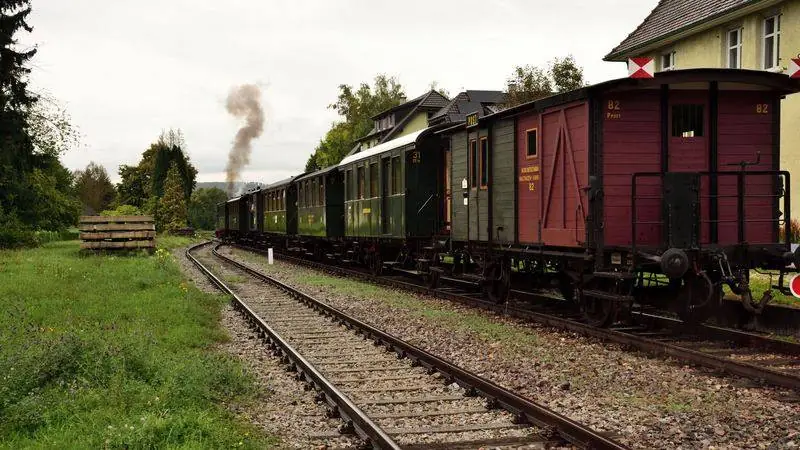


The Toronto to Niagara Falls train leaves from Union Station: GO Transit runs Lakeshore West trains through to Niagara Falls on weekdays and weekends, and VIA's Maple Leaf also stops there. Trains arrive at 4267 Bridge Street, about 5 km from the Fallsview hotels, so you still need a ride. By car the trip is about 130 km, 85–110 minutes, door to door.
The train to Niagara is a pleasant way to see the lake and skip the QEW, and for a lot of day-trippers it is the right call. Our Niagara Falls station page covers car pickups at the station. This post looks at the whole day: which trains, where they leave you, and how a car or an hourly chauffeur fits around the timetable.
Which Toronto to Niagara Falls train options are there?
Two operators serve the route from Union Station. GO Transit runs Lakeshore West trains through to Niagara Falls on weekdays and weekends, according to Metrolinx; at other times riders take the Lakeshore West line to Burlington and connect to a GO bus. VIA Rail stops at Niagara Falls on the Maple Leaf, the train it runs with Amtrak between Toronto and New York. Schedules, seasonal extras and fares change, so check gotransit.com and viarail.ca for your date. We do not reprint train fares, and we do not print our own; the car fare appears in our reservation engine before you book.
Where does the train actually leave you?
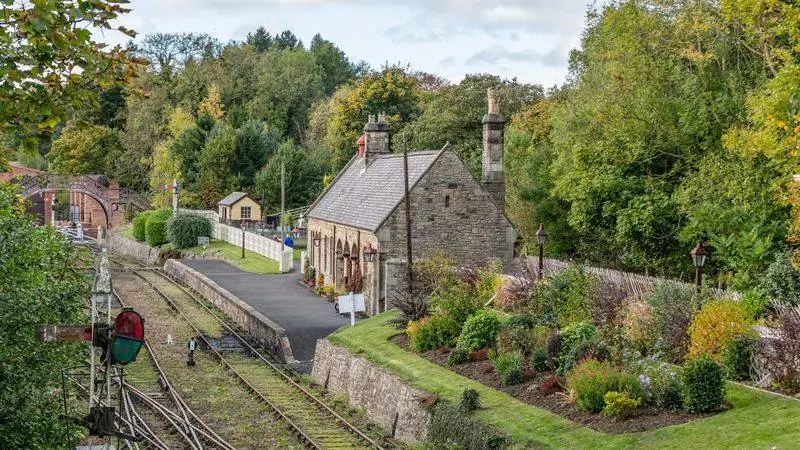
At Niagara Falls station, 4267 Bridge Street, in the older part of the city near the Whirlpool Rapids Bridge. VIA describes the station as unstaffed, opening about 30 minutes before a train and closing about 30 minutes after. That matters because the Horseshoe Falls, Clifton Hill and the Fallsview hotels are not at the station; they are about 5 km away, typically 10–15 minutes by car. Local options include the WEGO visitor buses (wegoniagarafalls.com), taxis and ride-hailing. Plan this last stretch before you go, especially with children or luggage.
How does the train day compare with a car day?
| Factor | GO or VIA train | Black car or hourly chauffeur |
|---|---|---|
| Start point | Union Station (or a GO stop on Lakeshore West) | your door anywhere in the GTA |
| Arrival point | Bridge Street station, about 5 km from the Falls | the Falls, your hotel or a winery |
| Distance and time | timetable; check the operators | about 130 km, 85–110 min |
| Wine country stops | not served | Niagara-on-the-Lake, about 20 km from the Falls |
| Finish time | the last convenient train | when you are ready |
| Luggage | carry it yourself; VIA lists no checked bags here | in the trunk all day |
| Group of six | six fares | one SUV or Sprinter |
What does a typical train day look like?
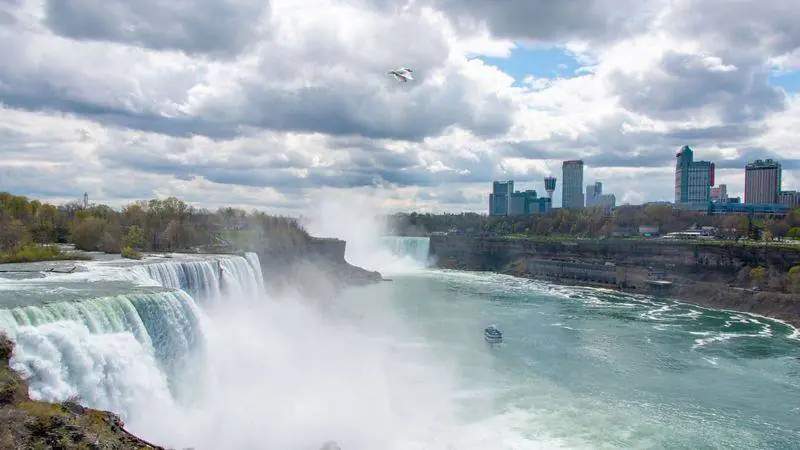
A common GO day runs like this. Take an early Lakeshore West train from Union or a west-end station; ride along the lake through Oakville, Burlington and Hamilton; arrive at Bridge Street mid-morning; take the WEGO bus or a taxi down to the river; walk the Falls, ride a boat, have lunch near Clifton Hill; and head back to the station for an afternoon or evening train home. It works well for a couple with day bags. The weak points are the station-to-Falls transfer at both ends and the fixed return time, which decides when the day ends.
Where do train days usually go wrong?
- Underestimating the last mile. The station is not at the Falls. Factor in 10–15 minutes each way, plus waits.
- Missing the return train. If dinner runs long, the next train may be hours away.
- Not checking which days trains run through. At some times GO riders connect at Burlington to a bus.
- Bringing luggage. VIA lists no checked baggage or lockers at the station.
- Planning wine country by train. Niagara-on-the-Lake is about 20 km from the station and not on the rail line.
Train out, car home: does that work?
It is one of the most popular plans we book. Take the morning train, enjoy the day, and book a car to collect you in the evening from your restaurant, winery or hotel rather than the station. The car takes you home along the QEW, about 130 km and 85–110 minutes to downtown, and later at night the highway is usually quieter. Because you choose the pickup time, the day ends when you want it to. The fixed fare is shown in the reservation engine before you confirm, and the chauffeur texts when outside.

When is an hourly chauffeur better than the train?
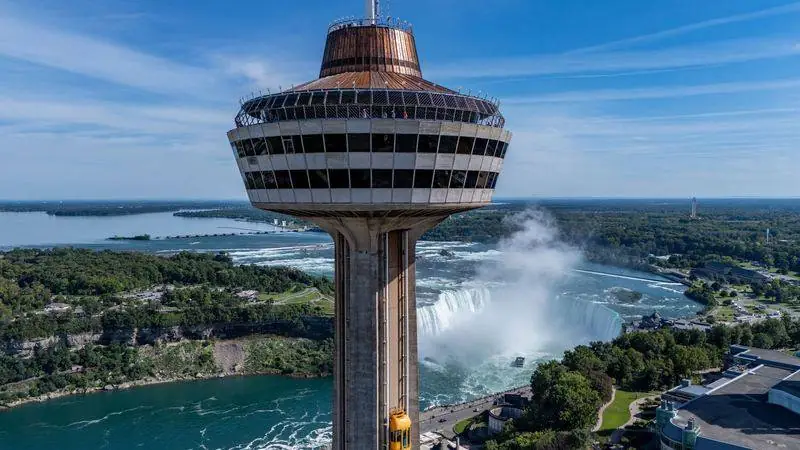
When the day has more than one stop. Our lead product is the hourly chauffeur service: one car and one chauffeur for a three-hour minimum or a whole day, extra time in 30-minute blocks. A Niagara day by the hour might be pickup at home at 9 a.m., the Falls and the Niagara Parkway, lunch in Niagara-on-the-Lake, two wineries, and home by 7 p.m. Nobody drives, nobody watches a timetable and the shopping stays in the trunk. Our Niagara Falls limo tours page explains how these days are usually planned, and Niagara Parks lists attractions along the river.
Is the train better for a family?
It depends on the family. Two adults and one older child with day bags will enjoy the train. Two adults with two young children, a stroller and a cooler will find the transfers harder, and the fares add up per person while a car is one fare for the party. An SUV seats six with four bags, and child seats are available at booking. For grandparents who find stairs and platforms difficult, a car from the front door is kinder; we have a wheelchair-accessible vehicle, available when booked in advance; chauffeurs fold and stow wheelchairs and walkers for passengers who can transfer to a seat.
How long is the drive compared with the train?
By road, downtown Toronto to Niagara Falls is about 130 km and typically 85–110 minutes via the Gardiner Expressway and the QEW. From Pearson it is about 125 km and a similar time. Summer weekends, long-weekend Fridays and harvest Saturdays in September and October slow the QEW through Burlington and the Grimsby stretch, and lake-effect snow can slow it in winter. Our Toronto to Niagara Falls route page has the full distance table, and we check Ontario 511 on the morning of every Niagara run.
What about staying overnight in Niagara?
An overnight stay changes the maths. With luggage for two nights, the train's lack of checked baggage and the station's distance from the hotel districts become real friction. Many guests book a car out to the hotel and use the train home, or the reverse. Our Niagara Falls hotels page covers the hotel districts and drop-off points, and the travel desk can book the hotel along with your transfers. If the stay includes a show or a late dinner, an hourly booking for that evening saves a taxi queue at closing time.
Does the train help visitors from New York?
The Maple Leaf links New York and Toronto through Niagara Falls, and some visitors break the journey there. Passengers entering Canada are processed by the Canada Border Services Agency, which can add time to the arrival. If you are stopping in Niagara and then continuing to Toronto by road, the car meets your train at Bridge Street, waits for the actual arrival and drives you on, so you do not need to rejoin the timetable the next day.
Wine country and the Niagara-on-the-Lake gap
Niagara-on-the-Lake and most wineries are not on the rail line, and that is the biggest argument for a car. From the Falls the town is about 20 km, 20–30 minutes; from downtown Toronto about 125 km, 85–105 minutes. A chauffeur turns three or four tastings into a relaxed afternoon, and nobody has to choose who stays sober. Our sibling post on the GO bus to Niagara vs a private car compares the bus option too.
What changes with the seasons on a Niagara train day?
Summer is the busiest season, with full trains on fine weekends, crowded boat queues at the Falls and heavy traffic around Clifton Hill. Autumn brings the harvest and the wine festivals, which pull visitors to Niagara-on-the-Lake rather than the Falls, and that is exactly where the train does not go. Winter is quieter, with shorter days and the Winter Festival of Lights along the river; a car is warmer for the station transfer, and our cars run winter tires from November to April. In every season, check the GO and VIA timetables for the day you travel, because extra summer trains and holiday schedules come and go.
Can business travellers use the train to Niagara?
Yes, especially for a conference at the Niagara Falls Convention Centre or a meeting in St. Catharines. The train suits one traveller with a laptop bag. A car suits a team, a day with several sites, or a return that has to connect to an evening flight from Pearson, about 125 km away. Our Niagara Falls Convention Centre page covers that venue.
Which vehicle should you book for a Niagara day?
For two people, a first-class sedan makes the QEW the relaxing part of the day; the business sedan is the practical choice. Families and two couples fit an SUV or a premier luxury SUV. Groups of up to seven take an executive Sprinter, and up to twelve a Sprinter luxury van. Stretch limousines for celebrations come from vetted partner operators in the LimousineWorldwide.Directory network, with a four-hour minimum.
What does the fixed fare include?
The reservation engine shows a fixed fare before you confirm: chauffeur, vehicle, fuel and gratuity, with HST shown separately. No surge, no meter. It changes with vehicle class, distance and time, extra stops, waiting, the date and season, and add-ons such as child seats, which are available at booking. For hourly days, the minimum applies and extra time is added in 30-minute blocks. See how our fares work.

How do you book the car part of a train day?
Open /book/. For a one-way car home, choose point to point and enter the restaurant, winery or hotel as the pickup. For a full day, choose hourly and enter your home address; tell us the stops in the notes. The fixed fare shows before you confirm. Cancellation is free more than 72 hours before pickup; 10 % at 72 hours or less, 50 % at 48 hours or less, and 100 % at 24 hours or less or a no-show.