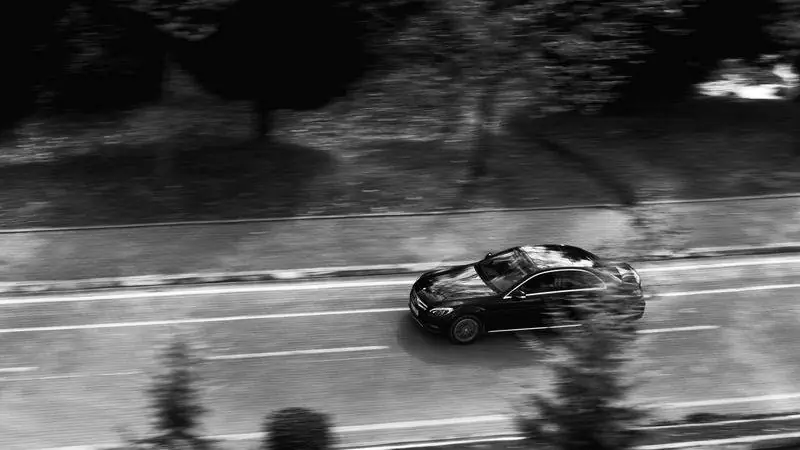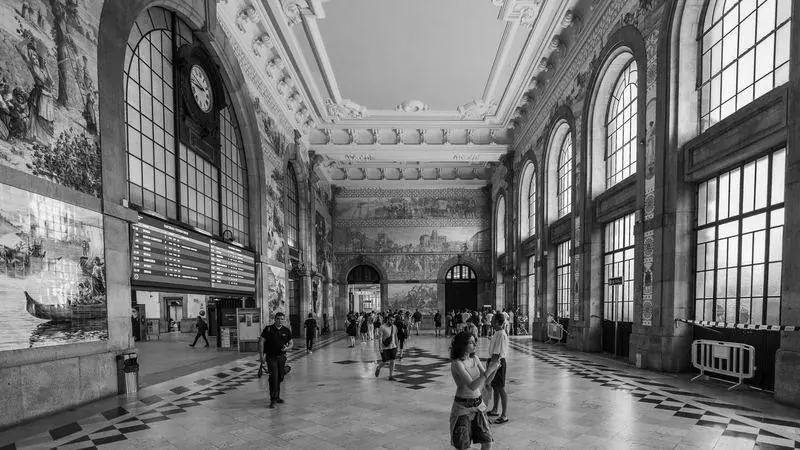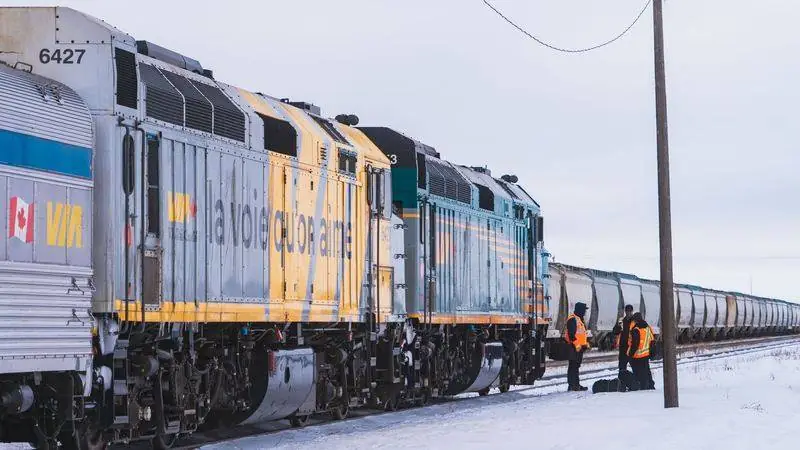


VIA Rail Toronto to Montreal runs Union Station to Montreal's Gare Centrale in roughly five hours on the faster trains; check VIA for the day's timetable. A private car covers about 545 km in 5.5 to 6.5 hours, door to door. The train usually suits one or two light travellers between downtowns; TorontoBlackLimousine.com's chauffeured car suits families, groups, heavy luggage and addresses far from either station.
VIA Rail Toronto to Montreal is one of the best train journeys in the country for a solo traveller, and we say so to customers who ask. It is also the trip where we most often hear, after the fact, "we should have taken a car": four people, six suitcases, a taxi queue at each end. Our Toronto to Montreal car service page describes the drive itself. This post compares the two the way travellers actually experience them, door to door, with five real profiles.
How long does VIA Rail Toronto to Montreal take compared with a car?
On the rails, the faster VIA trains between Union Station and Gare Centrale take about five hours, and others take longer depending on stops; VIA Rail publishes the timetable for each day. By road, downtown Toronto to downtown Montreal is about 545 km and 5.5 to 6.5 hours on Highway 401 and Autoroute 20, including a short break.
Those figures are not the comparison that matters. The train's five hours start at Union Station and end at Gare Centrale. Add getting to Union, arriving early enough to board with luggage, and getting from Gare Centrale to your door in Montreal. The car's six hours start at your door and end at the other one.
What does door to door look like for five different travellers?
| Traveller | Train door to door (planning) | Car door to door (planning) | Usually better |
|---|---|---|---|
| Consultant, downtown condo to Ville-Marie office, one bag | about 6 h | 5.5–6.5 h | Train: work on board, no cost of a whole car |
| Couple, Oakville to the Plateau, two cases | about 7 h with transfers both ends | about 6.5 h | Close; car if luggage is heavy |
| Family of four, Markham to the West Island, car seats | about 7.5 h with two transfers | 5.5–6.5 h | Car |
| Team of five, Bay Street to Laval site visit | 7 h plus a second car in Montreal | 5.5–6.5 h, one vehicle | Car |
| Student moving into residence, many boxes | Not practical | 6–7 h | Car |
These are planning figures built from the train time, typical transfers at each end and the drive time; your own trip depends on the train you choose and your addresses.
When is VIA Rail the better choice?
When you are one or two people, carrying what you can lift, travelling between addresses near the two stations. You get a reserved seat, room to work, a window onto Lake Ontario and the St. Lawrence, and no traffic to think about. Business travellers who need four quiet hours on a laptop often prefer it. We are happy to drive you to Union Station for the train and meet you there when you come back; our post on car service from Union Station explains how that pickup works.
What does a train day look like for the solo consultant?
Here is the profile where VIA wins, step by step, for a 9:00 a.m. departure:
- 8:15 a.m.: a sedan collects the consultant at a King West condo; Union is about 3 km and 10 to 15 minutes away.
- 8:30 a.m.: drop-off at the station, with time to find the platform and board without rushing.
- 9:00 a.m. to about 2:00 p.m.: five hours of work at a table, with calls taken in the vestibule.
- About 2:00 p.m.: arrival at Gare Centrale in downtown Montreal, a short walk or ride to an office in Ville-Marie.
One bag, one person, addresses near both stations: the train is simply the right tool, and our part is the ride to Union.
When does a chauffeured car win?
- Three or more people. One vehicle carries everyone and the bags.
- Luggage you would not want to carry through two stations: ski bags, several suitcases, a dorm room.
- Children and car seats. Seats are fitted at booking and stay in place the whole way.
- Addresses far from the stations. Markham to the West Island is a very different train trip from Union to Gare Centrale.
- A schedule that has to flex. The car leaves when you are ready, not at the departure time printed on a ticket.
- Stops on the way, such as lunch in Kingston, about 260 km from Toronto and roughly halfway.
Can you work in a car as well as on the train?
Yes, with a difference. On the train you have a table and the company of other passengers. In a car you have privacy: confidential calls, a video meeting without headphones, a team going through a deck together. A first-class sedan gives one or two executives a quiet rear cabin, and a first-class executive Sprinter with six captain's chairs works as a moving meeting room.

What about luggage on VIA versus a car?
VIA has its own baggage rules for carry-on and checked bags, and they differ by train and class, so check the rules on VIA's website before you pack. In practice, the train suits travellers who can manage their own bags on and off a car and through two stations. In a chauffeured car, the chauffeur loads and unloads, and the limit is simply the vehicle you book: an SUV carries six passengers and four large bags, and a Sprinter luxury van takes twelve and a lot of luggage.
Can you mix train and car on the same trip?
Often that is the best answer. Three common combinations:
- Car to Union, train to Montreal. We drive you and your bags to the station, and you take the train for the long stretch.
- Train there, car back. You travel light on the way out and come home with purchases or a colleague by road.
- Train between downtowns, car at the Montreal end. Through the LimousineWorldwide.Directory network, a local chauffeur meets you at Gare Centrale on the same Toronto account; see booking a limo in Montreal from Toronto.
Which is easier for older travellers or anyone with limited mobility?
Usually the car. VIA provides accessibility services, which should be requested in advance through VIA, but a station still means walking distances, platforms and a transfer at each end. A chauffeured car collects an older parent at the door, the chauffeur handles every bag, and stops happen whenever someone needs one. We have a wheelchair-accessible vehicle for anyone who must stay seated in a wheelchair or scooter, available when booked in advance: for passengers who can transfer to a seat, the chauffeur folds and stows a wheelchair or walker.
How does winter change the choice?
Winter strengthens the case for the train for solo travellers, and slows the car. The 401 between Belleville and Brockville is among the snowiest stretches on the route, and squalls arrive quickly. Our cars run winter tires from November to April, the chauffeur checks Ontario 511 and the forecast, and dispatch will call to move a departure rather than drive into a storm. Allow an extra hour by road in deep winter. Trains can be delayed by weather too, but they do not sit in a highway closure.
What about the return from Montreal to Toronto?
Think about what changes on the way home. Shopping, a colleague joining, or a flight from Pearson at the end. A car can finish at Pearson's departures curb directly, which a train cannot; plan the full drive time, a margin for the 401 through Durham and Scarborough, and your airline's check-in advice. For travellers flying out of Montréal-Trudeau instead, the car can end there, about 530 km from downtown Toronto.
When is an hourly or multi-day booking better?
When Montreal is a working visit, not a destination. A team doing meetings across downtown, a site visit in Laval and dinner in Old Montreal needs a car there anyway. Keeping the same car and chauffeur for the whole trip means the drive becomes the first leg of the visit; once there, the hourly chauffeur service runs with a 3-hour minimum and extra time in 30-minute blocks. Dispatch arranges the chauffeur's overnight and plans driver hours, and will never stretch one chauffeur through a same-day return of about 1,100 km.
What mistakes do people make choosing between the two?
- Comparing station to station instead of door to door.
- Forgetting the taxi at Gare Centrale with four suitcases at 9 p.m.
- Booking the car for the cheapest-looking hour, then leaving at 3 p.m. into the Durham rush.
- Ignoring stops. Lunch in Kingston adds an hour by car and is impossible by train.
- Not checking the train's actual time. Not every VIA train is a fast one.
What does the car fare include, and what changes it?
We publish no prices. The reservation engine shows the fixed fare for your addresses, date, time and vehicle before you confirm: chauffeur, vehicle, fuel and gratuity, with HST shown separately. What changes it is the vehicle class, the exact addresses, extra stops and waiting, a chauffeur overnight or a multi-day booking, and the date. How our fares work explains the details, and our Toronto to Montreal drive planner covers stops and timing.
Can the travel desk book the hotel and the train?
Our travel desk, run with BookingWorldwide.net, arranges hotels, flights and packages, so a Montreal trip can include a hotel near your meetings and the car or a flight home. For ideas at the Montreal end, the city's tourism office at mtl.org is the official source. Travellers heading for the national capital instead should read the companion post on VIA Rail Toronto to Ottawa versus a car.
How do I book a Toronto to Montreal car?
- Open the booking page or the booking form on any page.
- Enter your Toronto or Pearson pickup and your Montreal address.
- Choose the vehicle, the date and time, and add stops or child seats.
- For a multi-day stay or a quick return, add a note and dispatch plans chauffeur hours with you.
Cancellation runs from the scheduled pickup: free more than 72 hours before, 10 % at 72 hours or less, 50 % at 48 hours or less, and 100 % at 24 hours or less or on a no-show.