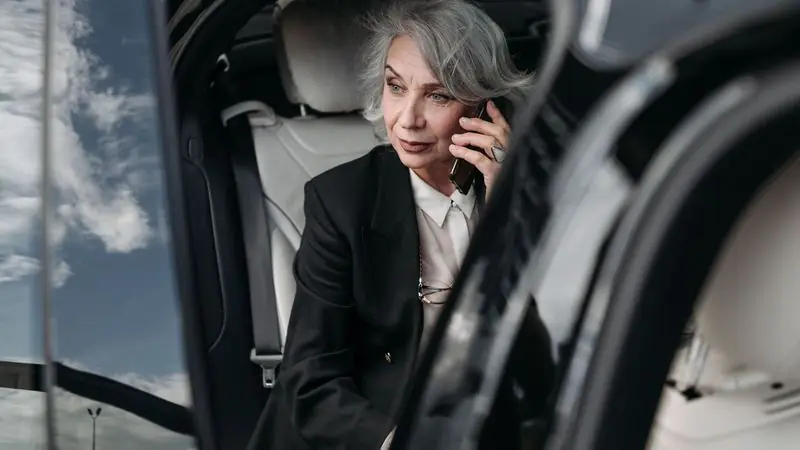


Transportation for elderly parents in Toronto works best as a mix: TTC or Wheel-Trans where they fit, community programmes for low-cost rides, and a booked private chauffeur for appointments, errands and family visits. TorontoBlackLimousine.com sets up standing rides, books by the hour (3-hour minimum) and lets adult children book and pay from their own account. See our medical appointment transportation page for clinic visits.
What does transportation for elderly parents in Toronto look like in practice?
It rarely starts with a plan. It starts with a dented bumper, a missed turn on the 401, or a parent who quietly stops going to the Thursday bridge game because parking at the community centre is too hard. Adult children then try to cover every trip themselves and burn out within a few months.
The families who manage it well do three things. They sort trips by type (medical, errands, social, family events, airport). They match each type to the cheapest service that genuinely works. And they keep one reliable, bookable option for everything that does not fit a bus or a volunteer programme. This guide walks through each step from the family's side of the table.
When should a parent stop driving?
That decision belongs to the parent, their doctor and the licensing rules, not to a car service. Ontario requires drivers aged 80 and over to renew every two years, with a group education session, a vision test and an in-class screening exercise (Ontario.ca). The province's seniors' driving and transportation page also lists alternatives and support.
Signs families mention: getting lost on familiar routes, new scrapes on the car, avoiding left turns or night driving, and friends quietly offering lifts. A gentler first step is often "no highway, no night, no winter", with booked rides covering those trips. Parents accept that more readily than handing over the keys.
Which transport options exist for seniors in Toronto?
| Option | Door to door | Waits during visit | Booking | Best for |
|---|---|---|---|---|
| TTC bus, streetcar, subway | No | No | None | Mobile seniors, short daytime trips |
| TTC Wheel-Trans | Yes | No | Application, eligibility | Riders with disabilities who qualify |
| Community transport programmes | Usually | Sometimes | Through local agencies | Medical and essential trips, low cost |
| Taxi or ride-hail | Yes | No | On demand | Short, simple one-way trips |
| Family driving | Yes | Yes | Family calendar | When someone is free |
| Private chauffeur, one way | Yes | 15 min included | Online, in advance | Fixed-time trips |
| Private chauffeur, hourly | Yes | Whole booking | Online, in advance | Errand days, long appointments, outings |
Wheel-Trans is the TTC's door-to-door service for eligible riders, and Ontario Health atHome can connect families to community support services. If a parent must stay seated in a wheelchair or scooter, we have a wheelchair-accessible vehicle; book it in advance and describe the chair at booking. If they can transfer to a car seat, we fold and stow the chair.
When is a private chauffeur the right choice?
When the trip has more than one stop, an uncertain end time, or matters too much to leave to chance. Examples families book with us:
- A specialist appointment, bloodwork and a pharmacy run on the same morning.
- The weekly errand loop: bank, grocery store, hairdresser, library.
- Sunday lunch at a son's house in Oakville (38 km, 30 to 45 minutes from downtown).
- A grandchild's graduation, wedding or recital.
- A cemetery visit on an anniversary, with time to stay.
- The ride to Pearson for a trip to see relatives abroad.
For a 10-minute trip to the corner clinic, a taxi is fine. Our chauffeurs earn their place on the longer, more personal days.
How does a weekly hourly errand day work?
Many families book a standing 3-hour slot on the same weekday, with the same chauffeur where the schedule allows. A typical Tuesday for a parent living near Yonge and Lawrence:
| Time | Stop | Distance and drive |
|---|---|---|
| 10:00 am | Pickup at home | Start |
| 10:15 am | Bank and pharmacy | About 2 km, 5 to 10 min |
| 10:50 am | Supermarket | About 3 km, 10 min |
| 11:45 am | Hairdresser or coffee with a friend | About 4 km, 10 to 15 min |
| 12:45 pm | Home, groceries carried to the kitchen door | About 3 km, 10 min |
The chauffeur loads the bags, waits at each stop and carries everything to the door. That is our private chauffeur service in its simplest form: the car is the parent's for three hours. Extra time runs in 30-minute blocks.
Can I book and pay from another city or country?
Yes, and this is how many of our elderly-parent bookings arrive. A daughter in Calgary or a son in London books on the reservation engine, pays from her own account and receives the confirmation. In the notes, add the parent's name and mobile or landline, the building entrance and buzzer code, and how the parent prefers to be contacted.
Ask the chauffeur to send a short text to the family when the parent has been picked up and dropped home. For parents who do not use mobiles, the chauffeur rings the buzzer or knocks rather than texting from the curb, and waits patiently while coats and keys are found.

How do chauffeurs help an older passenger?
The chauffeur arrives a few minutes early, comes to the door, offers an arm on steps, adjusts the seat and stows the walker or folding wheelchair. At each stop the chauffeur parks as close as is legal and helps the passenger out again.
What chauffeurs do not do: lift a passenger, give medication, or provide personal care. If your parent needs hands-on help to transfer, send a companion or a personal-support worker along, and we will seat both. A business sedan has the lowest step-in height; an SUV suits a walker plus shopping; tell dispatch about recent falls or surgery and we choose the vehicle with you.
How do we keep a parent's independence and dignity?
This matters more than any vehicle. Let the parent book or approve their own rides where they can, and choose the times. Use the same chauffeur so the face is familiar. Never discuss the parent in the third person in front of them.
Many parents resist "being driven" because it feels like losing something. Framing helps: a chauffeur is what busy executives use, not a sign of decline. A standing weekly car often brings back activities that had quietly stopped, such as the bridge club, church, the library or lunch with an old colleague. The goal is a parent who goes out more, not less.
What about medical appointments and hospital visits?
Plan medical rides separately, because they behave differently: clinics run late and patients feel tired afterwards. Book hourly for specialist visits and anything with tests. Our post on what to ask before booking a ride to a doctor appointment covers the details, and the ride home after day surgery explains why a companion is usually required after sedation.
For hospital-specific entrances, see Sunnybrook drop-off and waits and our university and hospital campuses page for hospital row on University Avenue.
How do we handle family events and celebrations?
Weddings, milestone birthdays and funerals are where elderly guests are most often forgotten in the logistics. Book the car for the grandparents first, not last. An hourly booking lets them arrive early to find a seat, leave when they are tired rather than when the party ends, and avoid the long walk from a venue parking lot.
For a parent's own 80th or 90th, the birthday limo page explains how families book a car for the guest of honour. For funerals, our funeral limo service handles the family car with the patience the day needs.
What about trips to the airport?
Elderly travellers flying to see family abroad need extra care at both ends. Pearson is about 27 km and 25 to 45 minutes from downtown. Airlines arrange wheelchair assistance through the terminal when it is requested with the airline in advance; our chauffeur covers the leg from the front door to the curb, and from the arrivals curb home on the return.
On arrival we track the flight and include waiting from actual landing: 30 minutes on Canadian domestic and US flights, 60 minutes on other international arrivals. Curbside pickup is included; a meet and greet inside arrivals is an optional add-on, available at booking, and reassuring for a first solo trip. Our travel desk can arrange the flights and hotel too.
What changes in a Toronto winter?
Winter is when isolation sets in. Icy sidewalks keep older people indoors for weeks, and a fall on the way to a bus stop can change everything. A door-to-door car with a chauffeur who offers an arm across the driveway removes the riskiest part of an outing.
Book winter standing rides early, before the first storm; demand for door-to-door service jumps the moment snow starts. On bad mornings, chauffeurs check Ontario 511, leave early and call ahead if the pickup is moving. Our cars run winter tires November to April.
What should the family's transport file contain?
Siblings who share the job of caring for a parent save a lot of phone calls with one shared note. Keep it in a family chat or a shared document, and copy the relevant lines into each booking:
- Address details: the entrance that is easiest, the buzzer code, and where a car can stop safely.
- Mobility: cane, walker, rollator or folding wheelchair, and whether steps are a problem.
- Seat preference: front or rear, sedan or SUV, and anything that causes discomfort.
- Hearing and vision: whether to knock rather than text, and whether large-print confirmations help.
- Regular places: the clinic, the pharmacy, the hairdresser, the place of worship, with their entrances.
- Contacts: two family members who can be reached during the ride.
- What not to share: diagnoses and medical records; we do not need them.
Send the stable parts to dispatch once and they stay on the profile, so every chauffeur sees them before pickup.
Which mistakes do families make?
- Taking the keys before arranging alternatives. The parent stays home, and isolation follows.
- Booking only medical trips. Social outings matter just as much for health.
- Rotating drivers every week. A familiar chauffeur builds trust.
- Forgetting the entrance details. Seniors' buildings often have a side door that is far easier.
- Not telling the parent who is coming. Share the chauffeur's name the day before.
- Ignoring free or subsidised programmes that suit some trips better than any paid car.
How are rides for elderly parents charged and booked?
We do not publish prices. The reservation engine shows a fixed, all-in fare before you confirm: chauffeur, vehicle, fuel, 407 ETR tolls on the planned route and gratuity, all included, with HST shown separately. Hourly bookings depend on the vehicle and hours; one-way trips on distance, time and vehicle.
To book, open /book/, enter the parent's address, choose one way or hourly, and add the notes: contact details, entrance, mobility aids, preferred chauffeur and a family contact. For a weekly series, send dispatch the dates once. Free changes are possible more than 72 hours before pickup; then 10 % at 72 hours or less, 50 % at 48 hours or less and 100 % at 24 hours or less.